A network inherits its construction history
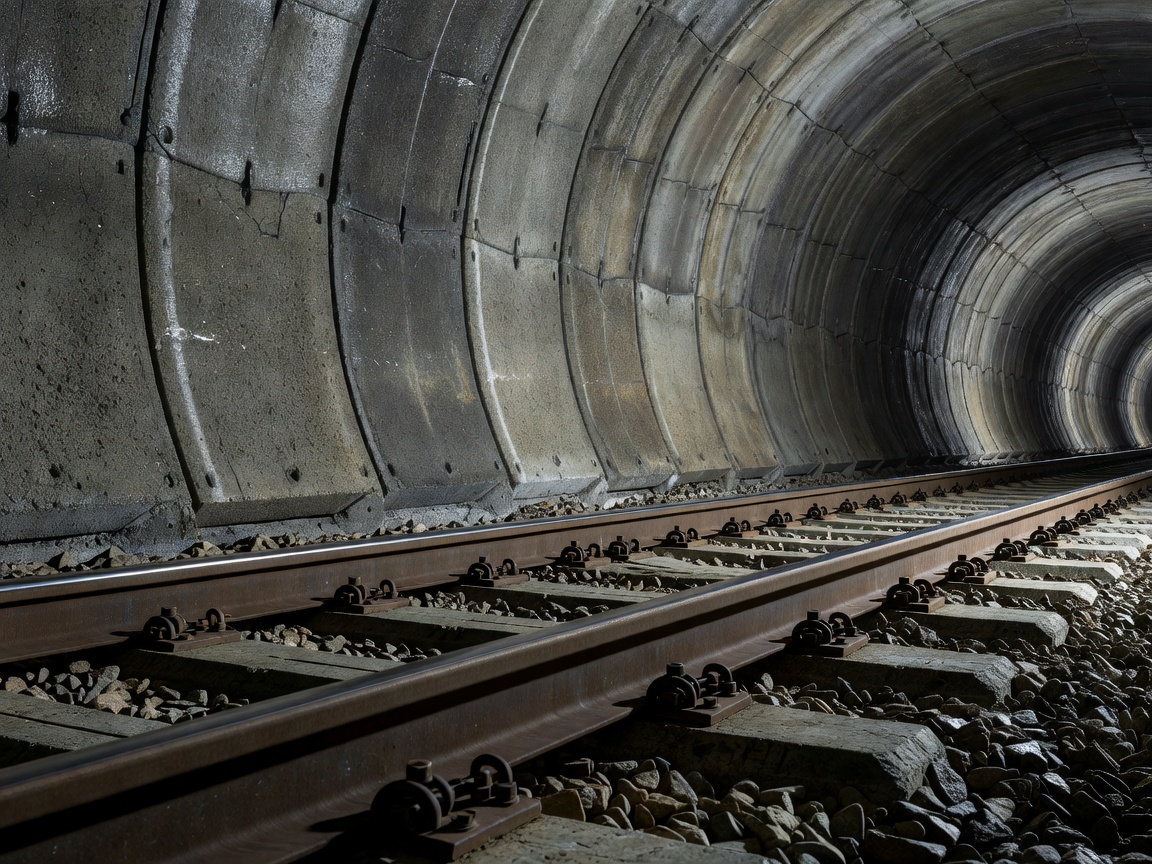
London’s first Underground railway opened in 1863. Its early construction relied on cut-and-cover methods: excavating from the surface, building the railway enclosure and restoring the street above. Later deep-level lines used bored tunnels. These methods produced different relationships with the city. A shallow route affected streets and utilities directly, while a deep route required more substantial vertical access between pavement and platform.
The distinction remains visible in station layouts, tunnel sections and the experience of changing lines. It also affects maintenance. A network assembled through different periods inherits structures, equipment and dimensions that were not designed as one uniform system. Rebuilding an interchange therefore involves more than drawing a convenient connection on a map; it means fitting new circulation into an occupied and historically constrained environment.
Deep construction does not make the surface irrelevant. Escalator shafts, lift access, ventilation equipment and emergency routes must still meet the city above. Work sites need space for materials and spoil. Existing foundations, utilities and neighbouring tunnels constrain alignment. The visible station entrance is often the smallest public expression of a much larger set of underground and surface interfaces.
Below water is not one construction method
Istanbul’s Marmaray crossing opened in 2013, linking railway services across the Bosphorus. Its central underwater crossing uses an immersed-tube section, connected to other tunnel works. An immersed tunnel is not bored through the ground in the same way as a tunnel made by a tunnel-boring machine. Prefabricated elements are placed into a prepared trench and joined, after which the structure is protected and integrated with the approaches.
That difference matters because construction risks and design requirements change with the method. Water exclusion, joints, foundation conditions and seismic behaviour are central to an immersed crossing. In a bored tunnel, face support, ground movement and lining installation may dominate the construction account. Neither method is universally superior. Selection depends on geology, water depth, navigation, environmental conditions and the connections required at either end.
For passengers, these distinctions may be invisible. For operators, the infrastructure must continue working as a coordinated whole. Drainage needs collection and pumping where gravity cannot provide an outlet. Power, communications and signalling need protected routes. Ventilation must address ordinary operation and emergency scenarios, with requirements shaped by the particular railway. A generic claim that trains simply push enough air through every tunnel is not an adequate account.
Not every underground network is a railway
Montréal’s connected interior pedestrian system, often called the underground city or RÉSO, combines passages with stations, shopping areas, offices and other buildings. Much of the experience is movement through linked interiors rather than through one continuous purpose-built tunnel. The network’s usefulness depends on entrances, wayfinding, level changes and opening hours across different properties. A line on a visitor map does not guarantee that every connection is accessible at every time.
This makes ownership and operation part of the engineering story. Doors may form boundaries between buildings with different schedules. A step-free route may diverge from the shortest walking route. Clear signs and dependable lifts can matter as much as the physical existence of a passage. The pedestrian’s network is therefore a combination of architecture, permissions and reliable information.
Helsinki provides another perspective through municipal planning for underground space. Subsurface reservations help coordinate transport, utilities, service uses and other facilities beneath an already occupied city. Planning matters because one excavation can constrain a future route. Rock cover, structural separation, access and connections need consideration before competing projects occupy the same volume of ground.
Operating space is not exploration space
Underground transport is maintained through controlled access, procedures and specialist work. Service doors, track tunnels, ventilation spaces and construction shafts are not alternative visitor routes. Their hazards include moving vehicles, electrical systems, restricted escape and sudden changes in operating conditions. Historical curiosity does not make an unauthorised entry safe or lawful.
A useful public reading stays with accessible evidence: station plans, official histories, museum displays and authorised tours. Observe how a concourse separates flows, where a lift reaches the surface and how signs distinguish an exit from an interchange. Those details reveal the system without requiring access to its restricted machinery.
Chronology note: a tunnel can outlive its original service
Routes may be extended, adapted or integrated into a new network. Separate the date of structural construction from the start of a particular train service. A familiar modern line name may be much younger than the tunnel it uses.
Check the record
For London, use London Transport Museum for history and Transport for London for current travel information. Consult the Marmaray operator for the Istanbul system. The Montréal tourism service offers a starting point for the pedestrian network, while the City of Helsinki publishes municipal planning information. Operating details can change independently of historical facts.